
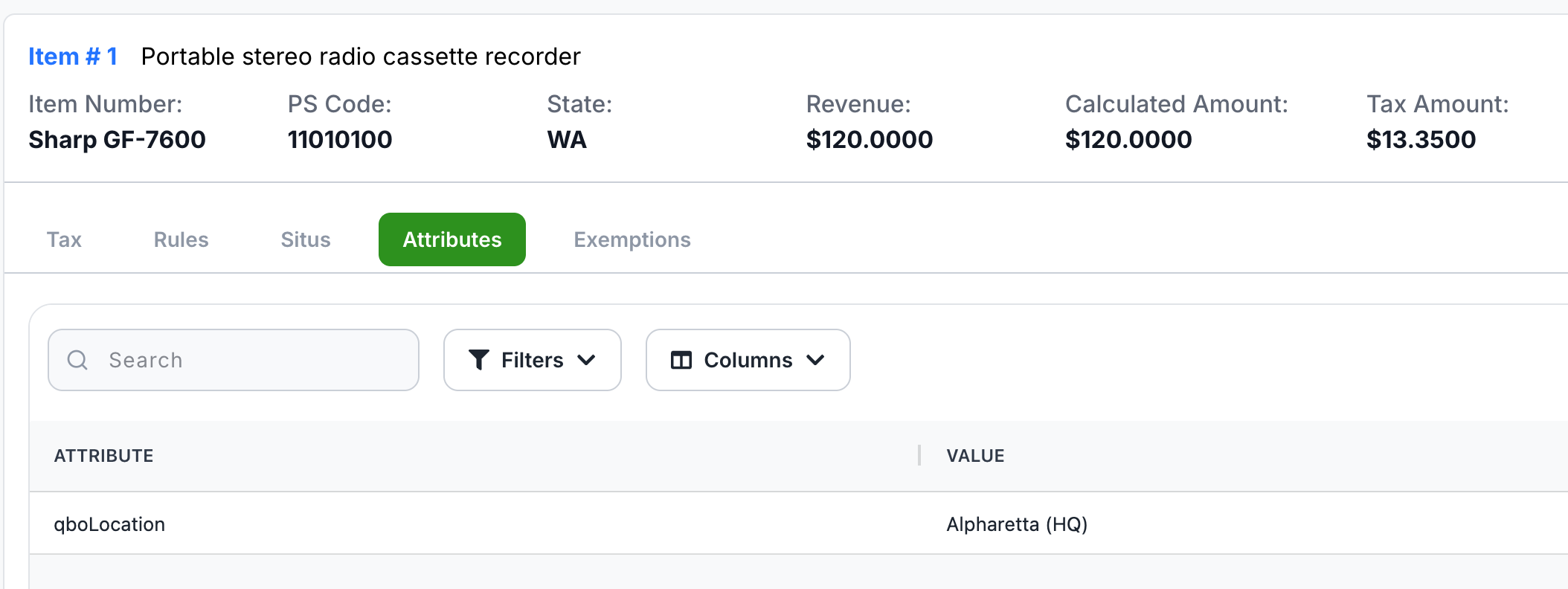
The location field (also known as the DepartmentRefID) is passed over as a custom attribute to the CereTax portal. The CereTax integration will pass the display name value as the value to the CereTax platform. You can find this by performing the following actions:
QBO allows you to edit the address fields, which can be very helpful when you need to make an edit during the transaction creation process. Unforutnately, this can cause issues with how that address is formatted resulting in data being entered into fields that they should not be. To help third parties, such as CereTax, we advise that you use some of these helpful technicques
The ShippingFrom address is sourced from your Company information located in the Account settings (gear>Account and Settings>Company). Sometimes that is a non-physical address or a shipping location. When that needs to change it toggles the standard address field into the free form address format. You can avoid issues by adding commas in between the address lines to ensure that the information can be parsed correctly.
For example, if you have an address for 123 Main Street, Anywhere GA 12345-6789 USA format the address as
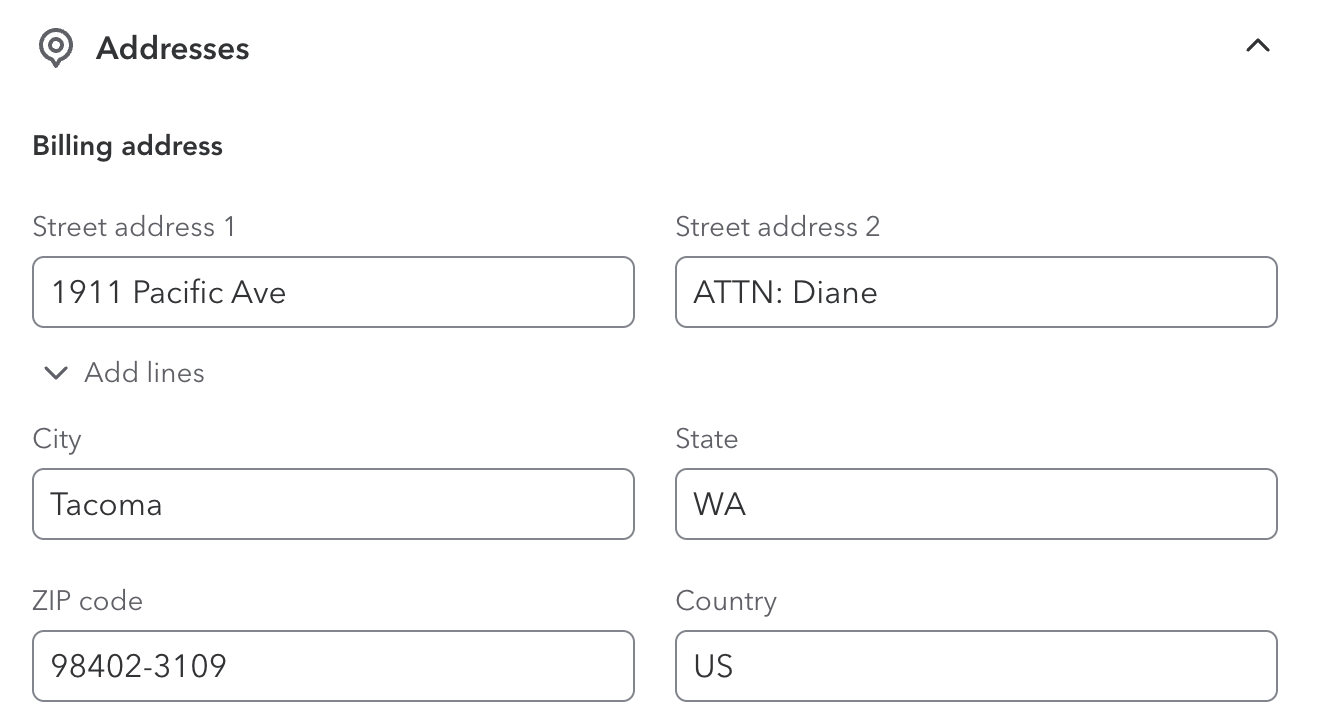
QBO will often include the Contact Name and the Company Name into the address format, which shifts the address lines. For example, our sample customer Lloyd Dobbler has an address of 1911 Pacific Ave, ATTN: Diane, Tacoma, WA 98402-31090 US. As you can see in the customer card below, this all fits nicely within the fields designated for that information. Address Line 1 is the street level, Address Line 2 is the Attention line, followed by city, state, zip, and country.
However, once a transaction is created the contact name and company name are added, which shifts the address values down in order where the structure is now passed by QBO as:
Our address validation service will attempt to remove the Contact Name, Company Name, and Attention lines to attempt to locate the address for tax calculation. That format will look something like:
Making changes to the structure or adding additional lines can cause field mappings to get shifted. If you are having issues with valid addresses, we advise following the USPS guidelines on address formatting to best address these issues.
For customers using QBO’s automated sales tax (AST):
Credit Memos
How to handle:
Additional Notes regarding the line item tax checkbox:
That is a field used by QuickBooks’ native tax functionality, I intentionally did not incorporate it into the integration because 1) we should be processing every line in order to report revenue correctly and 2) taxability should be driven by our ps codes.
Even QuickBooks will ignore that field if you have their automated sales tax turned on. Otherwise, it uses that field to determine which lines to apply the flat rate on the invoice to.
